New Strixhaven story: Off the Record

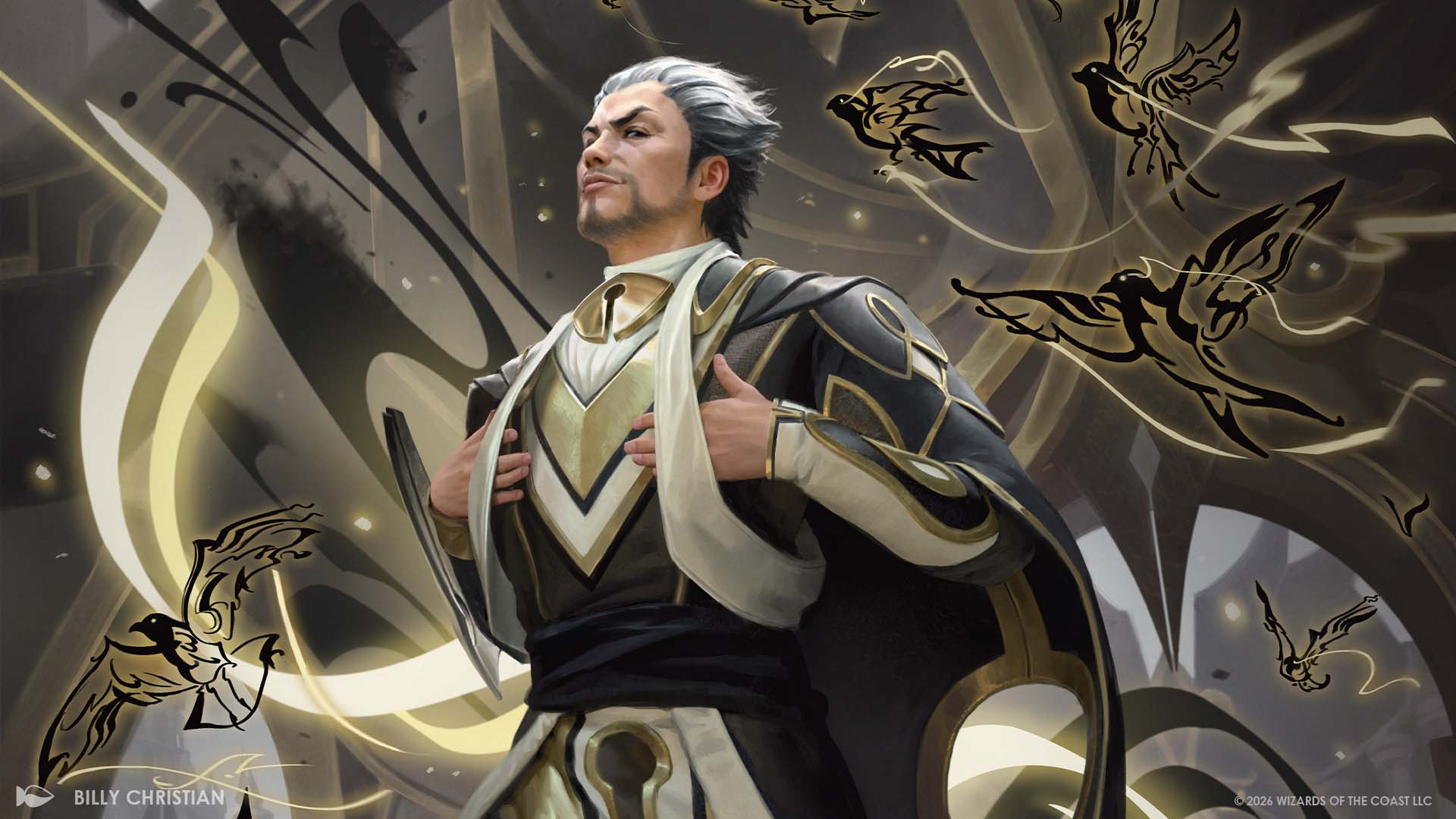
Ral Zarek (or is he) looking smug as he poses with his hands over chest, in a fashionable black, white and gold outfit, birdlike Inklings flying around him, a Silverquill building behind him

My side story for the upcoming Secrets of Strixhaven set, “Off the Record,” is finally available to read online! I’m so excited by all the speculation this is causing. Red string sales have skyrocketed. Silver fox jokes abound. My delight levels are over nine thousand.

Every time I write for Magic: the Gathering, I have these dueling impulses. How do I make something that fully embraces the depth and breadth of lore in the multiverse, while also feeling personal and accessible to me, living on our planet, in our time?

When I was asked to write this specific story, I read and reread all the Strixhaven material I could find to see what might be cool to include. There is so much! And yet there are also many gaps and unexplored places, names that are mentioned but not explained, dangling threads begging to be woven into new parts of the larger tapestry. Not to mention things that amused me to invent whole cloth. Who wouldn’t queue up for a Void to scream into?

Since this focused on a Silverquill character, and specifically a journalist, I really wanted to dig into notions of how words can be manipulative. They can inspire, and they can insult. They can reveal truth or obfuscate it. A glance at virtually any news headline today, clickbait or propaganda or otherwise, is ample proof of the ways we bend words and phrases to alter perceptions of reality.

The same can be said for photography, which I have somewhat casually invented an analog for among the Prismari students. The angle of a picture, what is included and what is left out of the frame, which precise moment is captured in a series of connected moments, what context is known or unknown about the subject—all of these things and more can manipulate the viewer in a multitude of ways.

There are so many additional psychological challenges that come into play as well, the intricacies and fallacies of logic and argument that Silverquill students would no doubt be trained to understand and use themselves. People are fallible, and sometimes the most fallible of all are the ones who think they know all the tricks and are immune to them. Being good at reasoning can also make you very good at rationalizing and lying to yourself. Social engineering can be more dangerous than any machine.

College students in particular can be extra susceptible to the kinds of manipulation that prey on their unique hopes and fears. We all, on some level, want to be admired for our skills, and are often positioned to be rewarded or punished for our performance by authority figures. Teenagers can be both malleable and fragile, learning and growing and developing their senses of self as they figure out the adults they want to become. The desire for positive feedback and in-group status can lead to some very bad choices indeed.

Silverquill is also fun for how its color combination manifests. One of the school’s core traits is ambition, which can be a positive force, pushing you to do better and be better for noble purposes. It can also lead to crab mentality, to climbing over your peers and kicking them on your way up so they can’t excel more than you. It can be cooperative or competitive, invigorating or soul-consuming. It can make you take dangerous risks for the elusive promise of praise and prestige, even if your intuition—or your Prismari friend—is warning you.

You may notice I’m dancing around discussing the new professor Ral Zarek and his role in all of this. Guess you’ll have to buy your own red string and start a murder board about it.

The main story for the set should be arriving later this month, so stay tuned. You can also preorder Strixhaven: Omens of Chaos by the inimitable Seanan McGuire, which comes out in April. If you do, you’ll get a special Strixhaven Command Tower card to add some mana to your pool.

Until then, as the Silverquill might say: may your style be sharp, and your wit be sharper.
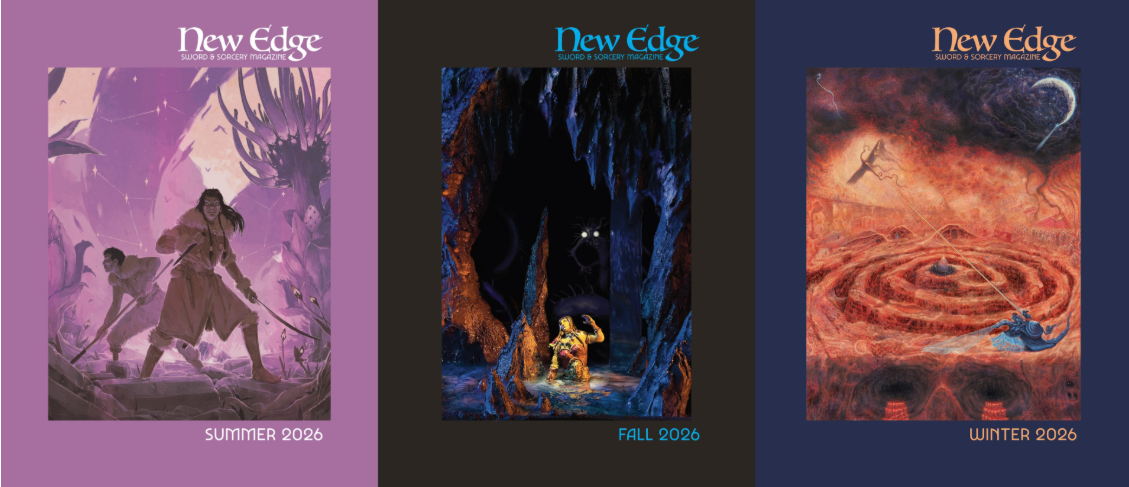
Add a New Edge to your sword and sorcery

the three covers of the 2026 hardcover editions of NESS, featuring a pair of Mongols battling a giant monster, a barbarian wading through water in a cave with a monster's eyes gleaming in the background, and a snail knight trying to escape a strange cloudy malestrom

New Edge Sword & Sorcery, aka NESS, is a magazine that’s been slowly growing since its inception a few years ago. You may recall when the publisher, with guest editor Jay Wolf, put out the Beating Hearts & Battle Axes anthology that I wrote a story for. (You can buy that now, if you haven’t yet!)

For the next week-ish, they’re crowdfunding this year’s issues, which include the usual S&S fare, along with a special dying earth-themed selection. As a stretch goal incentive, I’ll be writing a sword & sorcery flash fic for one of the issues!

As of the time I write this, they’ve just unlocked another author pay raise and a story by June Orchid Parker. There are still a few other goals between that and my story, but that just means there’s a lot to look forward to: digital art, bonus fics, and the lucky people who unlock the goals get special prizes as well.

I’m not only a stretch goal for this, I’m also the copy editor, which means I get the chance to see all the stories in advance. I’ve already edited a half dozen of them, plus a nonfiction article by Catherine Lundoff, and this year’s crop is looking great, as usual.

If you’re like me, you maybe watched the Conan cartoon as a kid, loved the aesthetics and the swords and the magical shuriken, then drifted away from the genre because it didn’t feel like it was for you. In my case, it was mostly the objectification of women; why read S&S when I could instead indulge in other kinds of fantasy where sexist stuff happened with less frequency and force?

What I love about NESS is that they’re working to change that, while still keeping the cool bits. The range of voices and perspectives is broader, but the snakes are still big and the swords are still sharp.

So! Let’s see if we can ride this hype train to the end of the line and unlock a bunch of fun stuff. As the NESS folks say, swords together!

Angie & Christie Write Now!

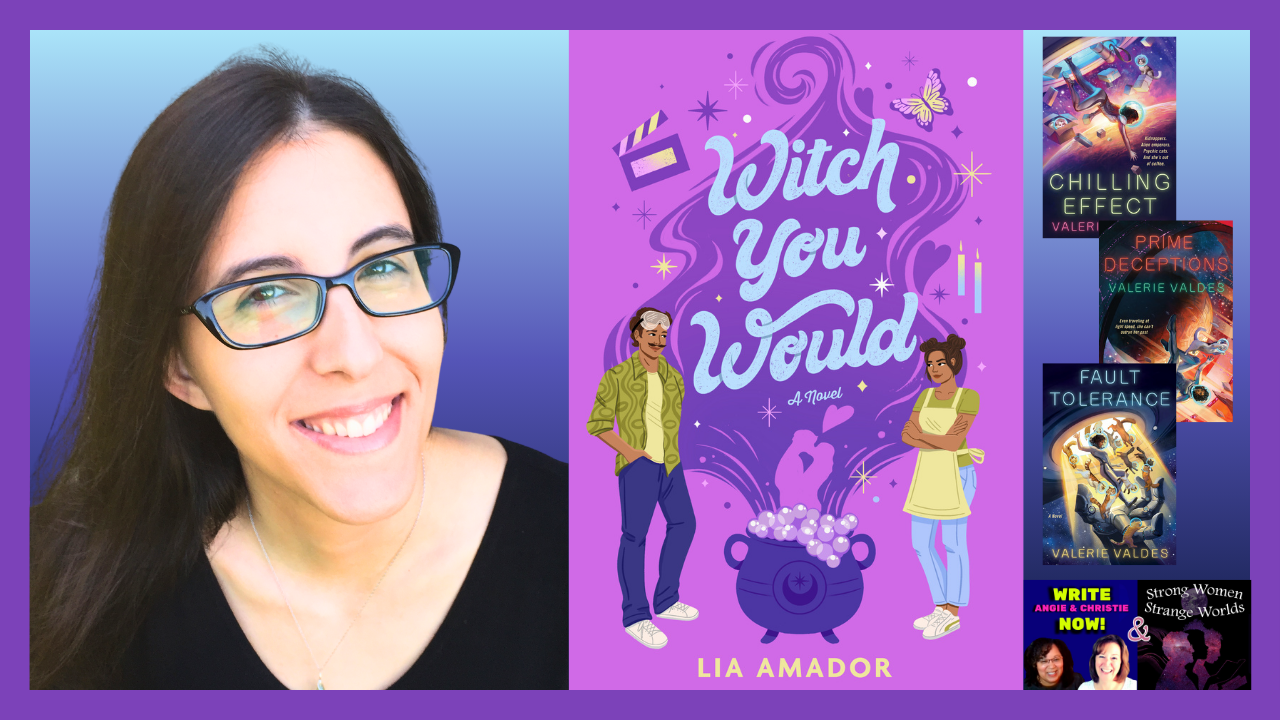
image containing headshot of Valerie plus the covers of four books including Witch You Would, and the Angie & Christie Write Now logo in the bottom right with the Strong Women, Strange Worlds logo

A few months back, I had the pleasure of being interviewed for the Angie & Christie Write Now podcast, and the episode is finally out! Give it a listen when you get the chance.

If you peruse their channel, you’ll find other cool interviews, Q&As and book recommendations from various authors as well. So you can start by listening to me yammer, then dive into the backlist. Backlisten? That’s a word now, I just decided.

Your keen eyes may also detect the Strong Women, Strange Worlds logo in the above image. They’re an organization dedicated to showcasing women and nonbinary authors of science fiction, fantasy, and horror. They host regular virtual live readings, with a few coming up quite soon! Check them out as well.

Be more dramatic, ironically

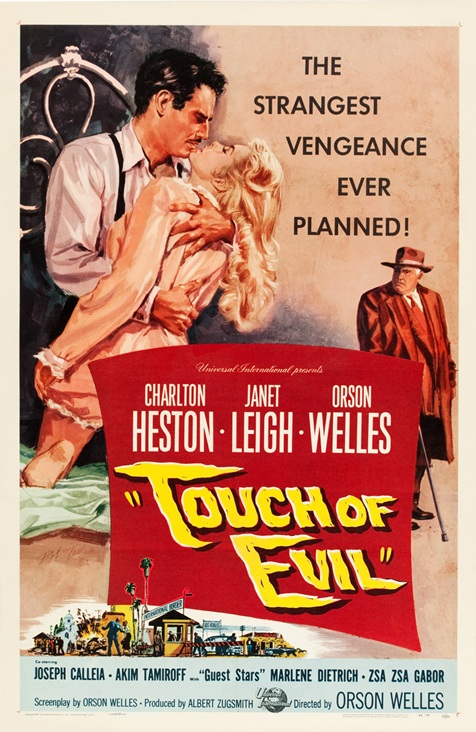
1958 poster for the film Touch of Evil, featuring an improbably Mexican Charlton Heston embracing a limp Janet Leigh while Orson Welles rocks a red fedora and suit and the iconic bomb scene is depicted in tiny shapes at the bottom

I posted this writing rant about twists and dramatic irony on Bluesky a few days ago, but it seemed useful to drop it on my blog as well, for posterity if nothing else! With some editing and expansion, of course.

I was inspired by Gwenda Bond sharing this piece about single vs dual POV in romance novels. Beyond the useful thoughts about what each approach accomplishes, it touches on the concept of dramatic irony, one of my favorite literary techniques.

If you know me or have met me, you’ve probably heard me repeat a lecture on twists my TV writing teacher gave my class over twenty years ago. It was delivered at the height of the Shyamalan twist, which many college students in the film program attempted to replicate, with mixed results.

M. Night Shyamalan didn’t invent the twist; at a minimum, we’ve got plenty of Twilight Zone episodes predating his work. I think, though, that when someone successfully executes a specific technique, there’s this ripple effect, a broad urge to try it as well. We’ve seen it with mystery/puzzle box shows, as another example, which is a whole other lecture I’m sure the same professor delivered later, when those got huge.

Anyway.

Twists became the lynchpin holding a lot of student scripts together. Instead of artful suspense and tension, many stories were basically:
1) Setup
2) Action
3) Twist
4) Please clap

The ubiquity of twists primed us to expect them, which in turn made us apply our story brains to guessing them in advance. We were students! It was our job to dissect stuff and figure out how it worked. Sometimes this ruined our ability to simply enjoy stuff; sometimes it made us better able to appreciate good craft.

If twists hadn’t been so common, maybe it would have been fine. Maybe our professor wouldn’t have felt compelled to intervene. But he did, and here’s what he said.

Twists are extremely difficult to execute well. If they’re too obvious, the audience can see them coming from a mile away. We feel bored, or insulted that you thought we’d fall for it. If they’re too out of nowhere, the audience feels dissatisfied because you basically tricked us, and not in a fun way. You pulled the rug out from under us; you painted a fake tunnel on a rock wall and chuckled cruelly when we ran into it.

In either case, audience expectations haven’t been met. You promised us a king cake, and instead we got a cake wreck, or a pile of rocks. The path between these two outcomes is a tightrope stretched across a ravine.

Surprise is good and desirable, but it’s not as useful as tension. Suspense. The anxious mixture of feelings you experience as you wait to see what happens to characters or a world you’re invested in. The cathartic release when the arrow that was loosed from the bow finally hits something.

Waiting for a twist to be revealed is a form of suspense, but as noted, the failure modes are not cathartic. They’re frustrating, annoying, unsatisfying. If you spend the whole time waiting for everything you know to be reversed or undermined, your attachment to the subject is diminished. Your enjoyment, instead of being ongoing throughout the story, becomes contingent on the final form of the twist and whether you like it.

Dramatic irony is the solution to this problem—or a potential one, at least. You give the audience information the characters don’t have, which creates natural tension as we watch actions being taken and choices being made without essential knowledge. The suspense is in waiting for the fictional people to catch up, or not, as the case may be. What will they do differently when they’re finally enlightened? Will it change anything? Will it be too late? What happens if they never learn?

If the audience is in on the trick from the beginning, we’re not being insulted by a bad twist the writer thinks we’re too obtuse to expect. We’re not being subjected to a random outcome we never could have predicted. We know, more or less, where the track leads, and we’re along for the ride, to see how exactly it crashes or how someone manages to save the day. We can still be surprised by what happens along the way, the nuances of character interactions, the specific details of the consequences and setbacks and so on.

Romances with dual POVs are one easy example of how dramatic irony can be effective. As the linked article above notes, we lose the single-POV sense of uncertainty experienced by the main character, who can only speculate about the unrevealed thoughts and feelings of the love interest. However, we gain interiority that allows us access to the logic driving the various decisions and misunderstandings typical of the genre. There’s a frisson of delighted frustration in watching two people fail and flounder and ultimately figure it all out.

There’s also the kind of edge-of-your-seat suspense you can derive from a well-placed imminent explosion, literally or figuratively. Touch of Evil by Orson Welles begins with someone putting a time bomb in the trunk of a car; this is followed by a single long take of just watching that car drive, waiting for the bomb to go off. We don’t know where the car is going, or why the bomb is there. We don’t know what will happen in the aftermath. Those are some of the most tense few minutes of cinema ever made, even though virtually nothing happens, because of the dramatic irony created by the setup.

This is not to say that twists are never allowed, or that no one is dissatisfied by dramatic irony. Failure modes can be things like individual scenes or the whole situation becoming painfully cringe-inducing, such that you don’t want to watch anymore. It can also become unreasonably farcical, breaking suspension of disbelief—say, because the characters remain ignorant even though it would be incredibly sensible for them to figure stuff out at various points.

For a class full of budding filmmakers, though, this was a lesson we really needed. It freed us to think in different forms and structures, to use the right tool for a given task instead of trying to apply the same hammer to everything. And clearly, I’ve never forgotten this! Hope it can help you, too.

Witch Is Mine cover!

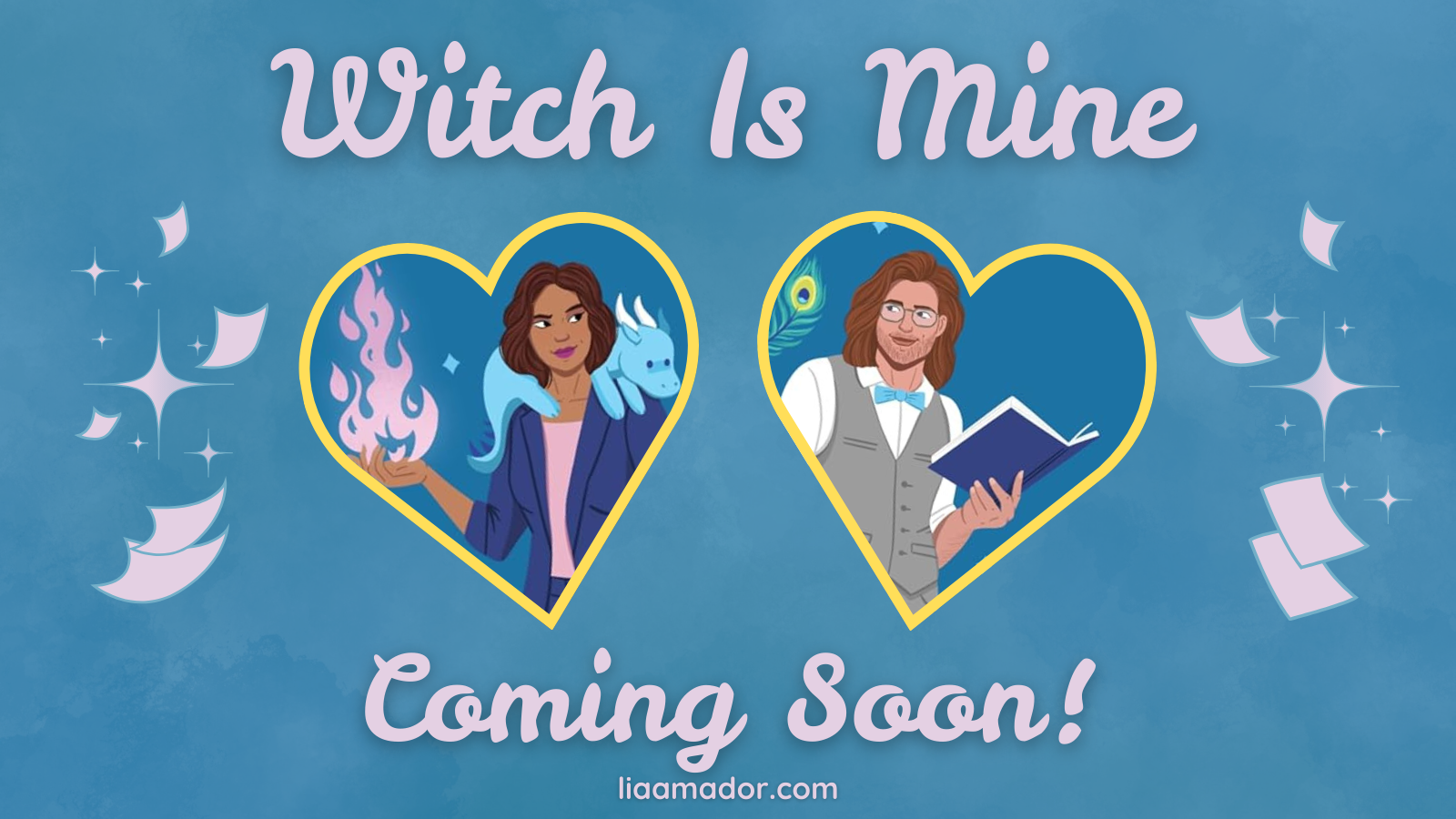
Emelia and Sebastian inside hearts looking at each other, floating papers and magic sparkles flanking them, text reads Witch Is Mine Coming Soon! liaamador.com

If you’ve been waiting for word on the sequel to Witch You Would, the wait is over! Witch Is Mine preorder links are now up, and so is the extremely adorable cover by artist Jess Miller.

The benefit of writing a sequel, in terms of cover art, is that you’ve already set a precedent. It’s good to maintain the format of what you’ve already got in some way, and change up the details to fit the new book. Cohesion! Continuity! You love to see it.

The challenge, then, is to figure out what to keep and what to change. What exactly do you want to add in terms of different elements? What are the symbols you can pull from the text and plop into the art so readers can judge your book by its cover?

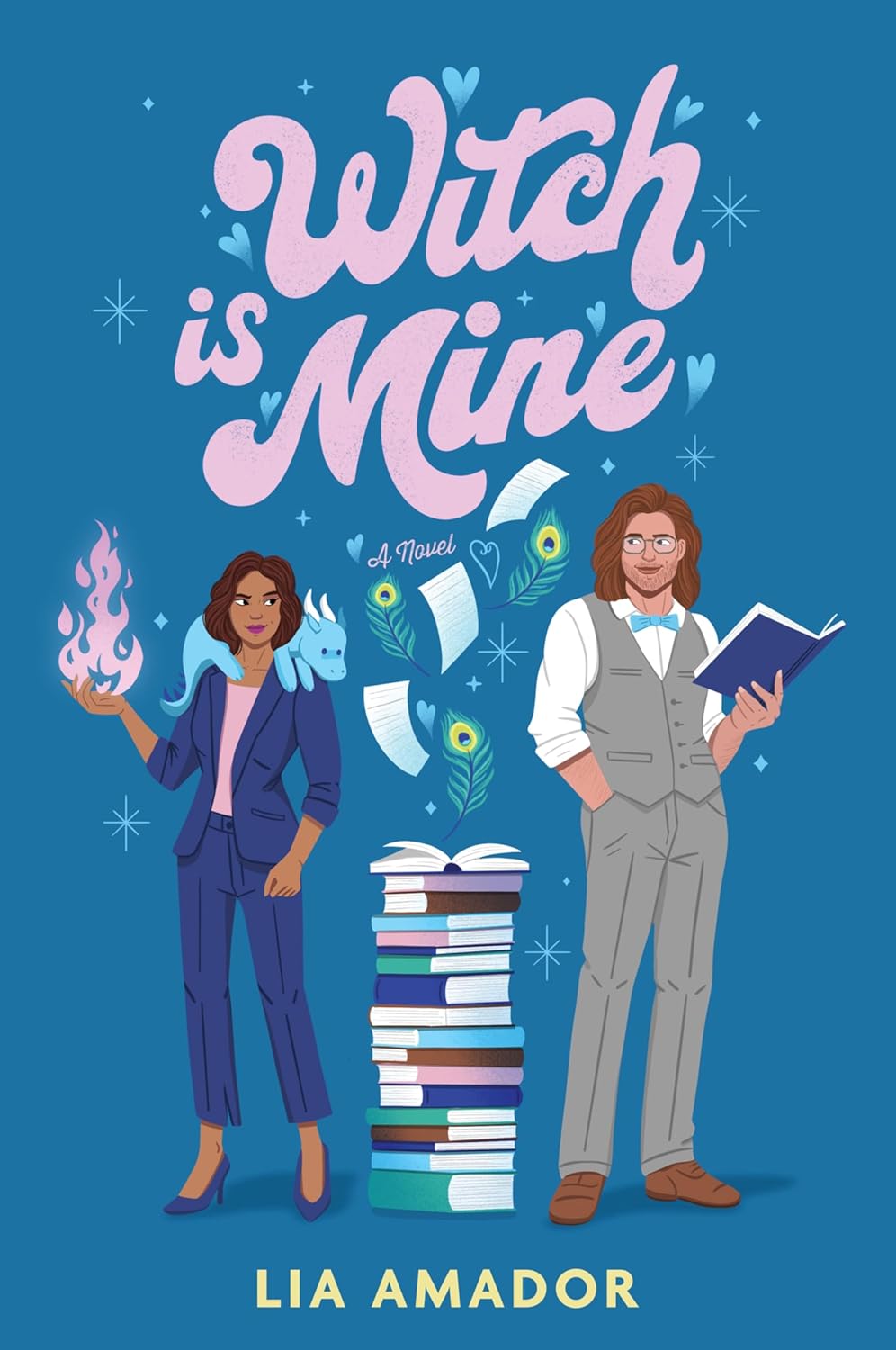
For Witch You Would, I knew I wanted butterflies and a slate, and the rest was up to the artist. For Witch Is Mine, I asked for books and peacock feathers. I also requested a dragon plushie, providing some sample photos of how I’d love it to look. Why these things specifically? You’ll find out when you read it!

Without further ado, check out these two nerds! I can’t wait for you to meet them.

cover of Witch Is Mine, with Emelia on the left wearing a pantsuit and holding a pink fireball, a blue dragon plushie wrapped around her neck, Sebastian on the right holding a book wearing a vest and bowtie, between them a stack of books with papers and peacock feathers flying out of the top open book

You may remember Emelia, Penelope’s sister, from the first book. Here she is, in all her professional yet resting-murder-faced glory! Sebastian is a new character, a stoic cinnamon roll librarian who loves his bow ties. Bow ties are cool, as everyone knows.

Right now, the book is set to release on October 9th, but discussions are in progress about potentially pushing that back to the beginning of next year. I’ll be teaching at Viable Paradise again in October, and for those of us in the US, that time is probably going to be… stressful, to say the least.

We shall see what unfolds! I’ll keep you updated. Meanwhile, join me in gazing raptly at this cover and emitting the occasional excited squeal and kicky legs. And hey, drop a preorder if you’re so inclined!

When life gives you floor pie

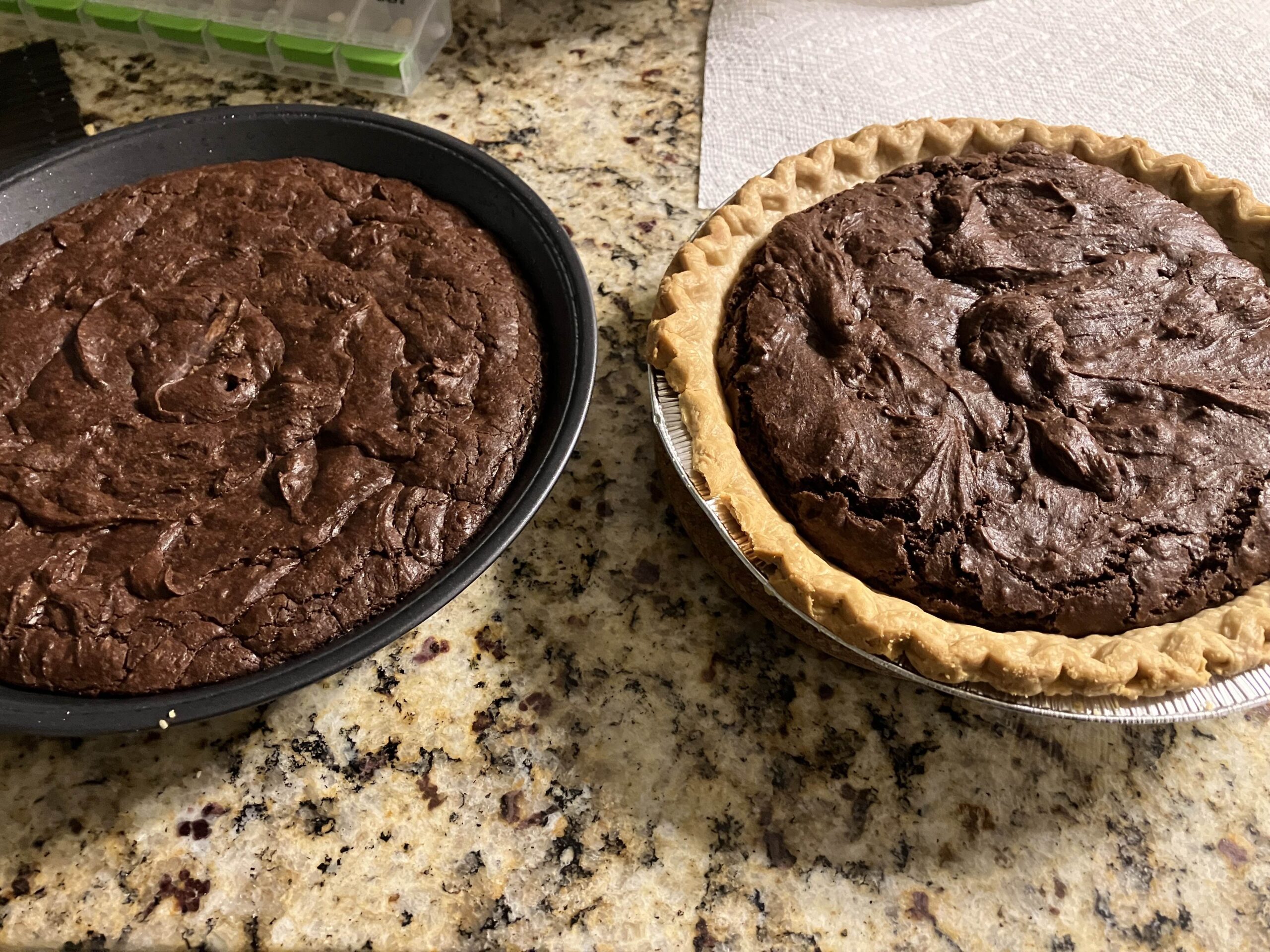
Brownies baked in a round pie tin next to a brownie pie, on a granite countertop, with a peek of my daily pill container in the upper left corner and a random paper towel in the upper right

Sometimes life drops a lesson on you, figuratively and a little literally.

The other day, I realized we were out of sandwich bread, so I set about baking some. Nothing fancy, just two loaves of white bread. I have a stand mixer with a dough hook and everything! Easy peasy.

My husband went to Costco to pick up our monthly-ish bulk groceries and sundries. He came home with a not-unreasonable quantity of frozen items… unfortunately, that same week, he’d already stocked up on different frozen items from the regular grocery store.

Our freezer is not the TARDIS, alas. It is not bigger on the inside.

I played freezer Tetris long enough to lose feeling in my fingers, and eventually managed to fit everything. Almost everything. No matter what I did, how I smooshed and shoved and stacked, one thing could not be contained: a two-pack of frozen pie crusts.

The fastest solution would have been to throw them away and move on, but I hate waste. And so, because life gave me pie crusts, I decided to juggle bread making while also baking some pies.

At this point, I had already plopped the bread dough into a bowl and it was proving for the first time. This meant I had a timer going, and when time was up, I’d have to punch and knead and split the dough into two baking pans for the second rise.

And also bake two pies. No biggie.

As inconvenient as this was for me, as much work as it made, my family was naturally delighted by the prospect of both bread and pie. Well, my daughter wasn’t, because she doesn’t really like pie crust, but she does enjoy scraping out the filling. We even had leftover homemade whipped coconut cream, waiting to be dolloped on top.

The vegan brownie pie I make requires that I prebake the crusts for a bit, so I did that while I assembled the other ingredients and kept an eye on my rising bread dough. I had to make a double batch, and all the measurements were in metric, so there I was, converting and mathing and measuring and pouring, melting chocolate and sugar in my rigged double-boiler, a.k.a. a metal mixing bowl held with an oven mitt over a pot of boiling water.

Did I mention I have ADHD? Ah, well, nevertheless.

I was managing. I finished the chocolate filling as both the pie crust and bread alarms went off nearly simultaneously. Deciding the bread could wait, I set out trivets, put on my trusty oven mitts, and started taking out the crusts. One down, one to go, and then…

My daughter ran into the kitchen. With the oven wide open, me leaning inside pulling out a pie tin.

My husband shouted. I startled. Down went the pie crust I fumbled in my alarm. Splat. Floor pie.

I closed the oven and took a deep breath. Now what? I had two pies worth of filling solidifying in the bowl, and one crust. And the bread dough waiting for me to give it a hearty smack.

I also had an empty pie tin in my cabinet. So I got that out, greased it up, and poured in the filling sans crust. One brownie pie, one… Just brownies, I guess.

You may remember from a few paragraphs back that my daughter likes pie, but not crust.

So, let’s review. My husband interrupted my bread making with too many freezer things, which meant I had to bake pies. Happy husband and son! I dropped one of the pie crusts whose inability to fit in the freezer led to emergency baking, and had to make one “pie” without crust. Happy daughter!

The only one inconvenienced was me, and in the end, that’s all it really was: an inconvenience. No one was injured, one half-baked pie crust was lost to gravity.

There’s a life lesson in here somewhere. About not giving up. About being able to pivot when stuff happens, about being flexible, about plans going wrong sometimes leading to new plans going right in unexpected ways. About managing frustration and failure, and seeing opportunities in accidents and mistakes.

Maybe it’s just a story about bread and pie. That’s okay, too. When life gives you floor pie, make brownies.

WriteHive Silent Auction

WriteHive logo, a honeycomb covered in circuit lines and circles, with a black computer chip in the center that reads "WriteHive"

Starting today, aka Giving Tuesday, WriteHive is holding their 2025 Silent Auction fundraiser!

I have three things up for bidding. You can get a 30-minute coaching call with me, where we can talk about whatever writing, publishing or career things you’d like. Or, if you want a signed/personalized book, you can bid on a copy of either Where Peace Is Lost or Witch You Would.

WriteHive is a 501(c)3 non-profit organization dedicated to helping writers achieve their goals. They have a variety of events and programs dedicated towards that purpose, including free virtual conventions and a year-round Discord.

All money raised will go directly to funding operations, allowing their volunteers to bring more opportunities to the writing community. You can win signed books, manuscript critiques, bookish merch, and other cool stuff.

Take a peek at the full list of what’s up for grabs here: https://www.32auctions.com/WriteHiveAuction2025

Bidding closes on December 17th, so mark your calendars and don’t miss out!

Latinx/Hispanic Heritage Month reads

Every time I use the word “listicle” it immediately turns me into Beavis and/or Butthead and I start chortling. For those who don’t know, it’s a portmanteau of list and article, and possibly it never caught on as a widespread term because of its inherent silliness.

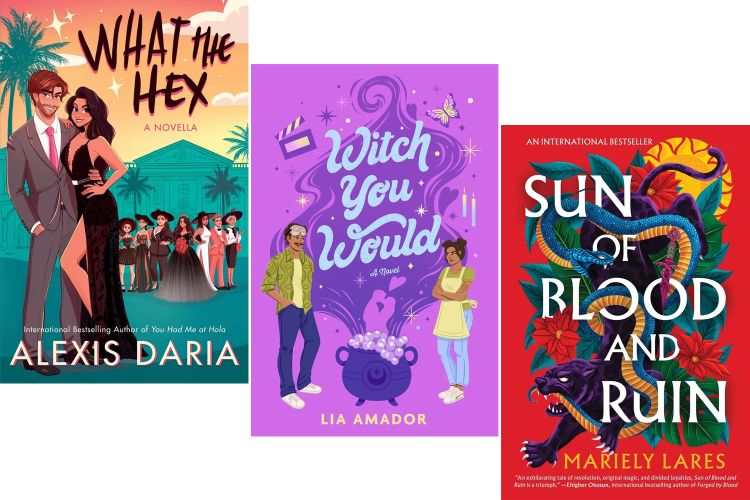
That said, I was asked to write one for People.com, and so I did! If you want a list of “9 Hot, Witchy Books to Read for Hispanic Heritage Month” then make with the clicking and enjoy the new additions to your TBR pile.

I stuck to a very specific theme, as you can see, which means I necessarily left out a LOT of great romance books by Latine authors. Thankfully, I’m not the only person out here writing listicles (chortle).

“9 Romance Novels That Will Transport You This Latinx Heritage Month” covers a whole range of romance options, including queer and historical romance. So does this list by Mia Sosa. A bunch of the authors have huge backlists, so you’re doing yourself a favor by grabbing one of their books. It’ll give you a lot more to read if you find something you like!

For books beyond romance, this sale ends today, but if you hurry over to Bookshop.org, you can grab a whole bunch of 2025 Latinx in Publishing Recommended Books for Latine Heritage Month for 20% off!

Last important note: today is the final day to grab the hardcover Aardvark Book Club version of Witch You Would. It’s extremely awesome! Next month, a whole new set of cool choices become available.

Got any more suggestions for books by Latine authors? Drop them in the comments!

Chilling Effect is in The Club

Six audiobook covers on a space background showing stars and part of a planet below. Text: Takes Place in Space. The Club | hoopla. The books are Countess by Suzan Palumbo, The Stars Too Fondly by Emily Hamilton, Chilling Effect by Valerie Valdes, Annihilation Aria by Michael R. Underwood, Wayward Galaxy by Jason Anspach and J.N. Chaney, and Star Shroud by Ken Lozito.

If you’re part of a book club that likes space opera, good news: Chilling Effect is (for now) one of Hoopla’s Book Club Selections!

The Club offers recommended audiobooks, eBooks, and comics and manga that libraries and patrons can use to host book clubs in person or virtually. All recommended titles from The Club are available on Hoopla Instant, so book club members can read or listen all at the same time with no holds or waiting. And starting this year, The Club is also available in Canada for the first time.

You can borrow Chilling Effect as an eBook or audiobook, whichever floats your spaceship. The other books shown in the image at the top are also great, especially Countess by Suzan Palumbo and Annihilation Aria by Michael R. Underwood. Check them out, too!

(This is old news to folks who are subscribed to my newsletter, but I figured it was worth dropping here as well for posterity and anyone who might have missed it the first time around.)

Time to take Flights (of Foundry)

Flights of Foundry logo

Flights of Foundry is an awesome, free* virtual convention held every year, and it’s coming up soon! From September 26-28th, there will be over 250 panels and presentations running pretty much nonstop.

This year, I’ll mostly be moderating a lot of cool stuff. You can also grab a ticket for my chill-n-chat, which has limited seating.

My schedule is on the Events page for reference, but here’s a more thorough look at what I’ll be up to, with descriptions:

September 26, 2025

  • 2pm ET: The Added Depth of Speculative World Building. A panel discussion on the skill and purpose behind speculative world building to add depth to character and theme, including why the speculative is uniquely suited to this as well as examples from publications.
  • 6pm ET: The Medium is the Messenger: Novel Characters versus Characters for Games. A panel discussion on the skill and purpose behind speculative world building to add depth to character and theme, including why the speculative is uniquely suited to this as well as examples from publications.
  • 11pm ET: How to Submit Short Fiction. You wrote/translated a thing! Now you’re looking for places to submit and there are so many magazines and anthologies. Panelists share tools and tips (and some appropriate cautions) from the trenches.

September 27, 2025

  • 2pm ET: Part of This World: Setting Your Story in Real World Locations. A panel discussion on what to include, exclude, change, and keep when writing stories set in real world locations with tips on how to research and examples from published stories.
  • 6pm ET: Romance in Games. What’s hot, what’s horny, and what’s tender and touching. Join our panelists for recommendations, discussion, shipping, and sipping all the tea about love, affection, attraction, and all things romance in games.
  • 8pm ET: We All Win Together: Cooperative Board Games. Not every game has to be competitive! Panelists discuss the joys of cooperative board games: what kinds are out there, which ones they love, and why it can be so much more fun to win together.

September 28, 2025

  • 12pm ET: Play Again to Find Out: Storytelling Through Iteration. While many games have a clear, mostly-linear plot, others instead have a story, world and characters that emerge only by replaying them over and over. Whether in a roguelike game (Hades), or an exploration/builder/puzzler (Blue Prince), or a logic mystery (Return of the Obra Dinn), we’ll discuss how video games can tell stories through iterative gameplay.
  • 5pm ET: Chill-n-Chat. A casual conversation covering any topic the attendees are interested in.
  • 7pm ET: Kaia Ball’s Contest Winner Showcase. Join us for 2024 contest winner Kaia Ball giving a reading and being interviewed by judge Valerie Valdes.

If anything changes, I’ll update the Events page accordingly. Whether you come to these panels or any of the many others, I hope you’re able to hop on some flights and have a great time!

*Flights of Foundry is hosted by Dream Foundry, a registered 501(c)3 non-profit that relies on donations to run the convention, Con or Bust, and contests for emerging writers and artists. You can absolutely attend the con for free, but if you can toss a coin to your Witcher, it’s extremely appreciated!