Scenes, sequels, and degrees of disaster

Photo of a person hanging from a nearly horizontal cliff face above the ocean, other distant mountains in the background
Photo by Hu Chen on Unsplash

I got an email from a writer who took one of my classes, and who wanted to know how to take a plot outline and turn it into chapters and scenes. I linked them to an anatomy of a scene post that I think does a good job breaking down one useful and streamlined approach to scene structure*.

This method posits that every scene should have three components: a goal, a conflict, and a disaster. Essentially, you should have a character trying to accomplish something, struggling against obstacles and antagonists, and ultimately failing to achieve their goal. That failure leads to the sequel, which is a different kind of scene in which the character reacts to what just happened, is faced with a difficult choice, and decides how to move forward. That leads to another scene with a new goal, etc., repeat this cycle until you reach The End.

The “disaster” part described in the link above is also sometimes called the try-fail cycle. If the character simply succeeds at their goal every time, there may not be enough tension and suspense to keep the reader turning the page. But if all they do is fail, then you don’t have a story, either, because they’re just spinning their wheels.

Here’s where I like to apply a model I learned from tabletop gaming. Instead of a disaster, each scene can end with an outcome ranging from extreme failure to extreme success.

The failure can be simply that the character didn’t manage to do the thing they set out to do; the mountain pass is blocked, and they have to find another path, perhaps a more dangerous one. Or they can somehow make their situation worse than it was when they started; they trigger an avalanche that sweeps them off the mountain and buries them under a ton of snow, and now they have to dig themselves out before they suffocate.

They can also have a qualified failure or success. Maybe they don’t manage to achieve the goal, but their failure points them in the right direction or provides some useful boon or new ally. The mountain pass is blocked, but a strange hermit will guide them… for a price. Or they succeed, but at a cost that immediately affects them or will become a problem later—an injury that needs treating, a new enemy on their trail, a Chekhov’s gun that will go off at the worst possible time.

They can also do the thing by the end of the scene, even if it’s difficult and they try and fail at least once, or they can do the thing stunningly well because they’re awesome and why shouldn’t they. Sometimes you do have to let your characters showcase their talents!

Usually, the qualified failures/successes are the most versatile scene outcomes, because they maintain tension but also keep the plot moving forward instead of hitting a wall. But you do want to sprinkle in the other options at the places where they’d be most dramatically appropriate.

If you’re going by a beat sheet, for example, then a total failure scene should probably happen around the midpoint and/or during the All Is Lost/Dark Night of the Soul beats. You might have an amazing success at the midpoint instead, only for the victory to end up souring, or the character’s arc being one where the success at their goal isn’t the end of their story. You might even have multiple goals and outcomes within a scene, some succeeding and some failing, though you have to be careful not to cram too much in one place.

The degrees of disaster, their vibes and variations, will depend on what kind of story you’re trying to tell. A grimdark story may have more total failures with terrible consequences that really twist the knife; a romcom may have more funny fail-forward situations; a political space opera may have complex machinations where each win or loss causes both visible and unknown ripple effects.

Your goal, as the writer, is to keep the reader interested and invested in every scene. As long as you’re doing that, you’ve succeeded!

*Not the only way, certainly. There is no One Right Way, and as the saying goes, anyone who tells you otherwise is selling something.

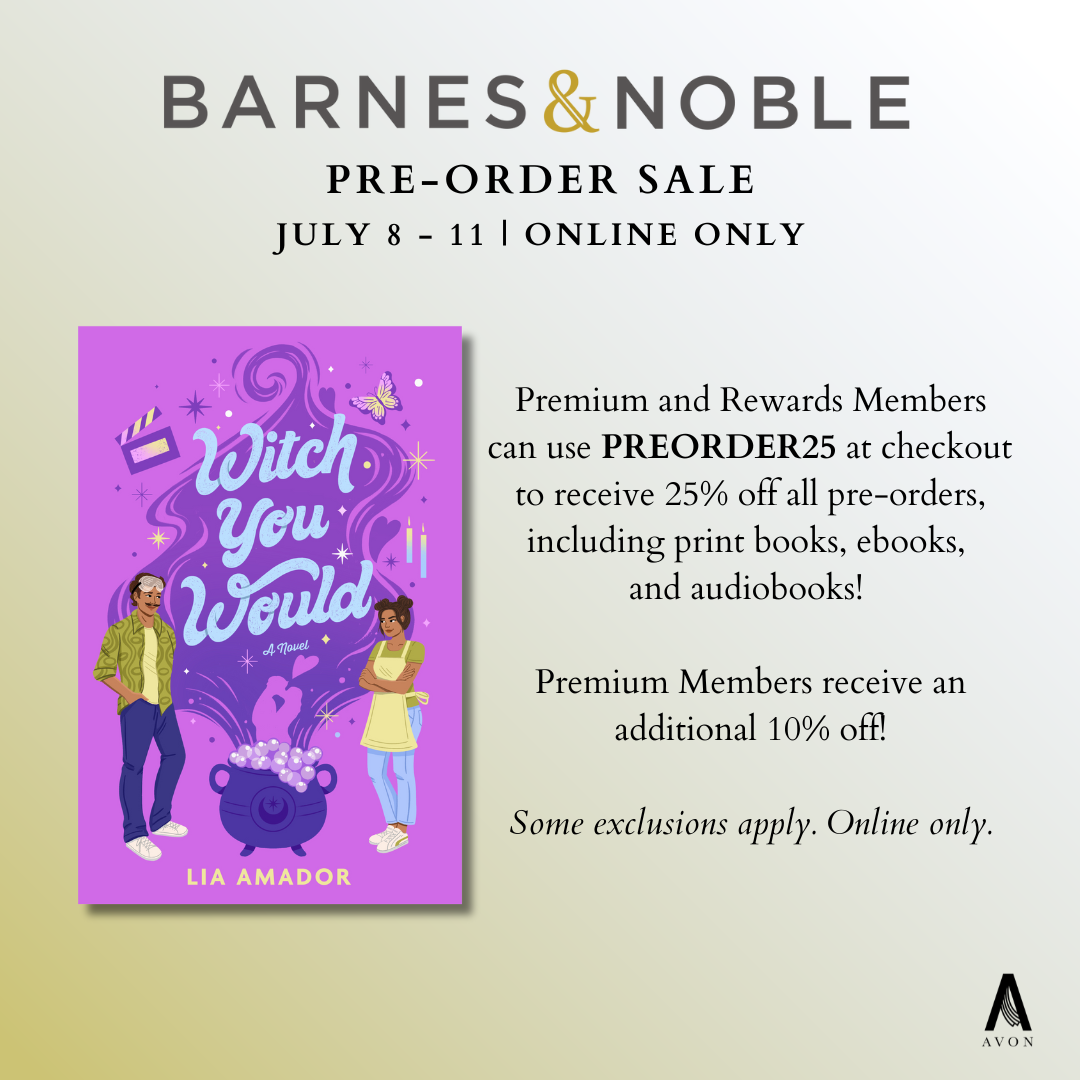
Return of the Barnes & Noble pre-order sale!

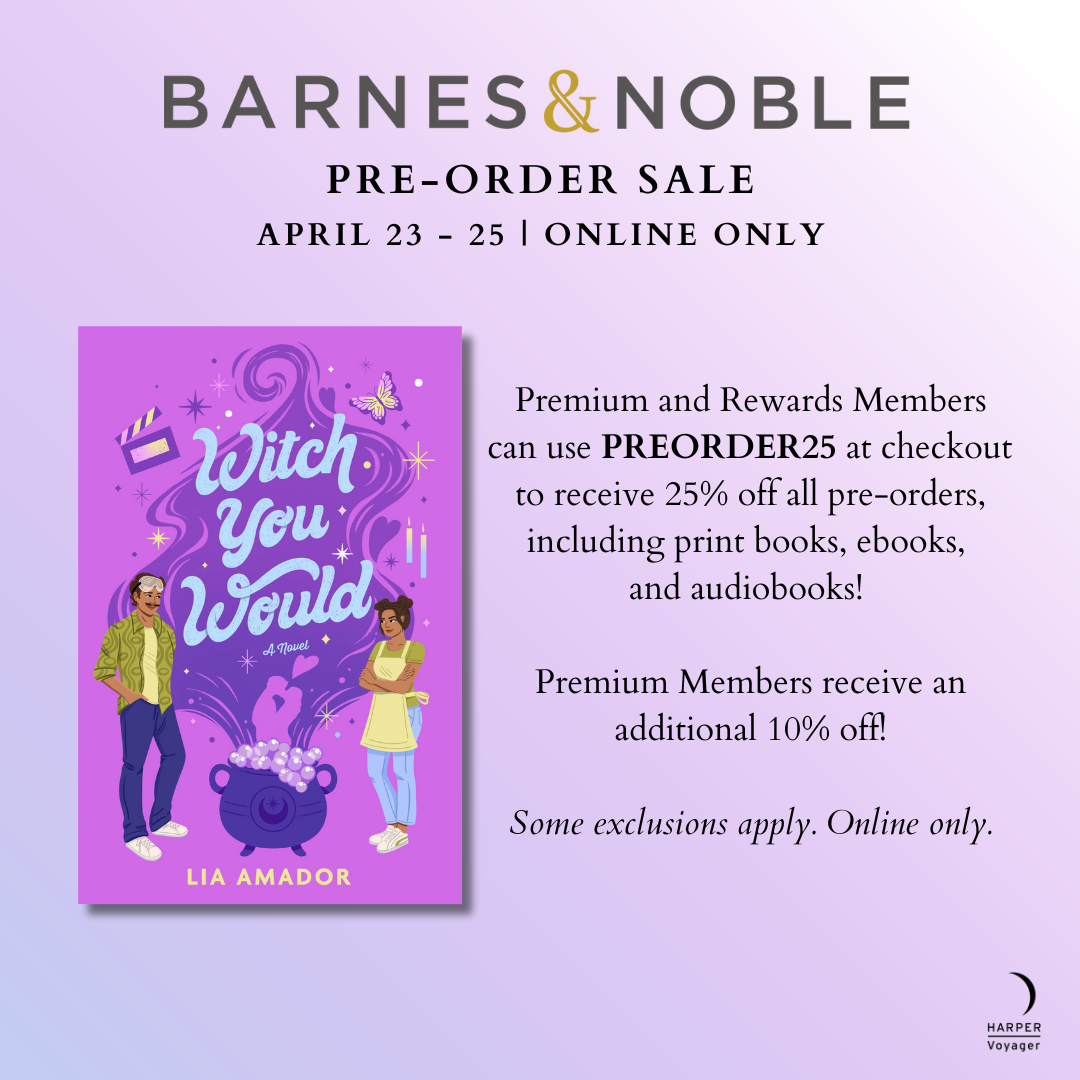
Barnes & Noble Pre-Order Sale July 8-11 Online Only. Premium and Rewards Members can use PREORDER25 at checking to receive 25% off all pre-orders, including print books, ebooks, and audiobooks! Premium Members receive an additional 10% off! Some exclusions apply. Online only.

If you’ve been waiting for a sale so you can grab a pre-order for Witch You Would, good news! Barnes & Noble is once again having a pre-order sale.

Until Friday, July 11th, Rewards program members get 25% off all pre-orders, and Premium members get another 10% off. You have to order online and use the code PREORDER25 for this magical discount to take effect.

It’s been exciting and scary to see reviews coming in for this. I try not to read them as a rule, but I am weak and this is a new genre for me. I want everyone to love my goofy nerds as much as I do! But not every book is for every reader, and that’s okay, too.

On that note, Witch You Would isn’t the only book on sale, so this is a good time to get any other upcoming releases you’re excited to read. Drop any recommendations in the comments!

A busy bee at WriteHive

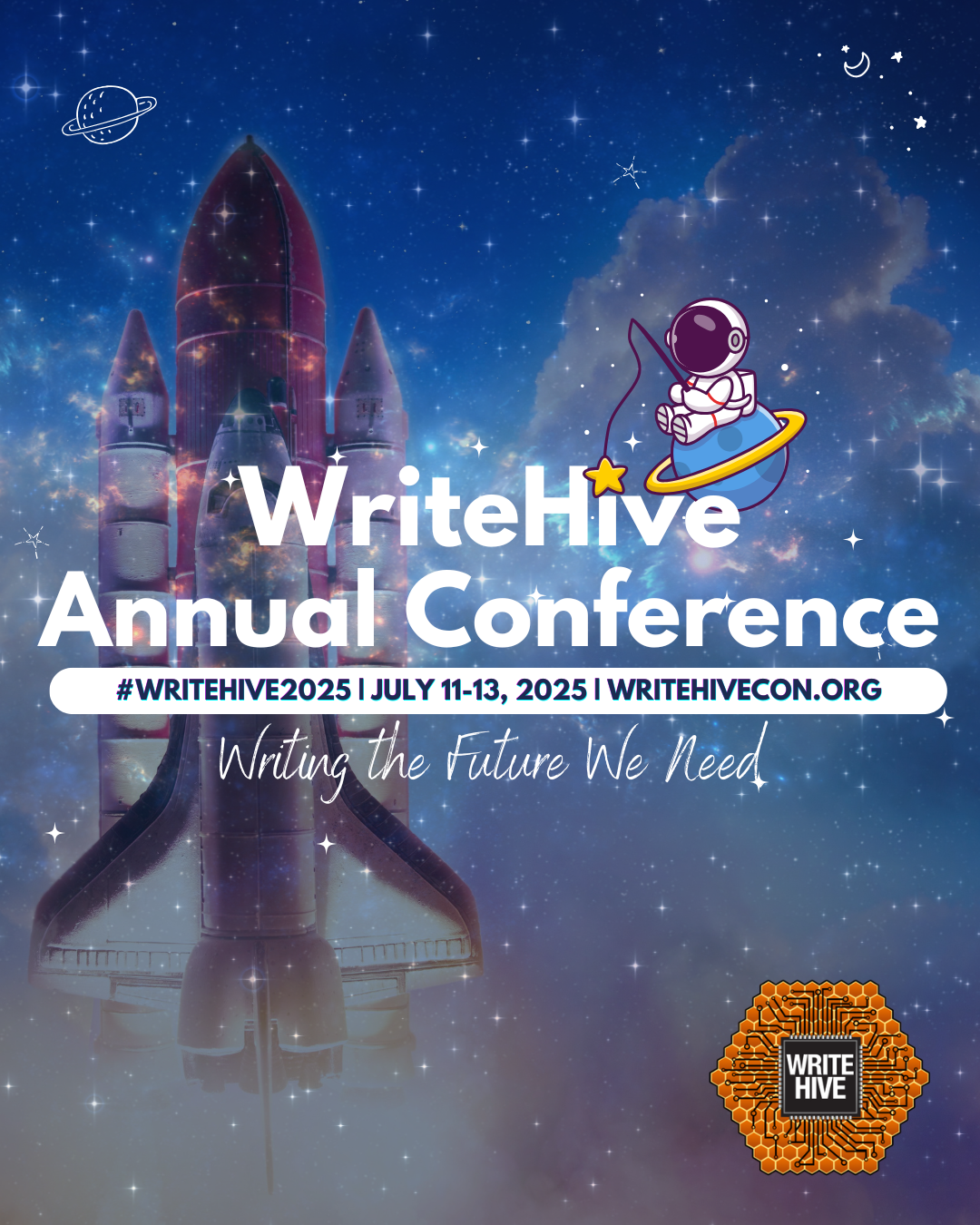
a rocketship blasting off with little space doodles, an illustrated astronaut on a ringed planet, fishing for stars, a logo for WriteHive, and text that reads WriteHive Annual Conference #Writehive2025 | July 11-12 | Writehivecon.org Writing the future we need

The 2025 WriteHive Annual Conference is a free online writing conference, and I’ll be there! If you want to attend panels, workshops, and readings, and maybe even pitch an agent or two, check it out.

Catch me live at a round table about fantasy on Sunday, July 13th, at 12:30pm ET, with Rachanee Lumayno and Shameez Patel. We’ll answer audience questions about any fantasy-related topics that strike your fancy.

Then I’ll be hanging out in the Discord chat for two pre-recorded panels. Writing Mental Health: When the World Mirrors a Dystopian Novel is at 2pm ET, and I had a great time moderating for Amanda Cessor, B.L. Brown, Camden Rose, Katta Kis and Marisa Noelle. At 6pm ET, Hopepunk: Writing with Empathy in Dark Times features me, Cait Gordon, Jesse Pohlman, and Matthew Phillion, moderated by S. Morgan Burbank.

There’s a ton of cool stuff happening, so take a peek at the conference schedule, and then grab your ticket now!

Yelling for the cheap seats

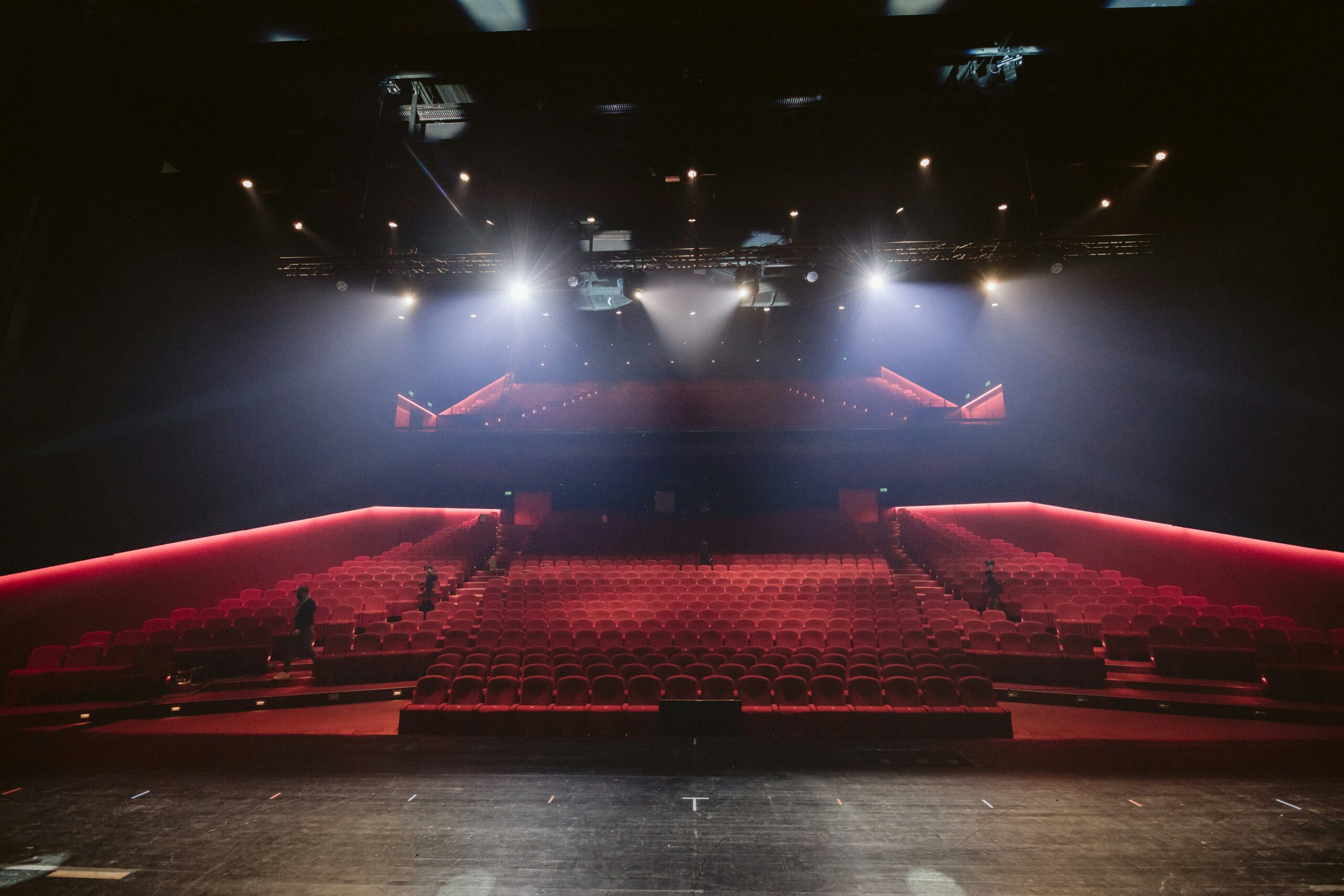
Photo of a theater as seen from the stage, part of the stage at the bottom and rows of red upholstered seats rising up to the back/middle of the photo, with the balcony seating at the back/top along with the lighting along the ceiling
Photo by Kevin Schmid on Unsplash

There’s a writing concept that I’ve seen people describe in a few different ways. The one I repeat the most, which I learned from my friend Jay Wolf, is, “Yelling so the people in the cheap seats can hear you.” Another, via Bree and Donna of Kit Rocha, is “dropping the anvil.” Yet another, more distant but still related concept, is “writing for the second screen*.”

What do I mean by all these things?

When you’re trying to convey something essential to the reader, you have to make sure they pick up what you put down. If you don’t, they may get confused or upset or disengage from the story.

Everyone reads differently, and it can vary by day or mood or a million little things. Some readers—friend Jay calls them “close readers”—catch subtle hints, innuendos and subtexts and casual references that are mentioned once and never again.

Others—call them “loose readers”—aren’t reading as carefully, for any of many reasons: they’re tired, they’re speed-reading, they keep getting distracted or interrupted, there’s a lag between reading days or times. Still others are skimming, scanning, reading mostly the dialogue, skipping to the saucy bits.

Because everyone is reading your work differently, it’s worth—within reason—finding ways to accommodate those differences as you write, to make sure as many people as possible are getting the essentials.

You yell so the people way in the back of the theater can hear you, not just the ones in the front row. You drop the anvil so the people who didn’t notice your more delicate hints are sure to spot that one. You use techniques that allow the people experiencing your work like it’s a second screen—multitasking, being interrupted, surrounded by noise—to catch what’s important instead of missing it.

A prime example comes from my new book, Witch You Would. Multiple readers have asked the same question: can anyone in this world do magic?

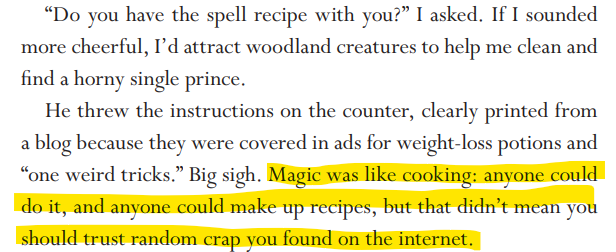
The short answer is: yes! It’s mentioned on page two, quoted in the section below, in which a customer is being nasty:

“Do you have the spell recipe with you?” I asked. If I sounded more cheerful, I’d attract woodland creatures to help me clean and find a horny single prince. He threw the instructions on the counter, clearly printed from a blog because they were covered in ads for weight-loss potions and “one weird tricks.” Big sigh. Magic was like cooking: anyone could do it, and anyone could make up recipes, but that didn’t mean you should trust random crap you found on the internet.

So if the answer is right there (and in a couple of other places), how did so many people miss it?

Because I didn’t yell it for the cheap seats.

What are some ways to accomplish this? A few ideas:

  1. Repetition. If you only say a thing once, some people are sure to miss it. If you repeat it a few times, in different ways, each repetition increases the odds that more people will catch it instead of having it whoosh past them.
  2. Clarity. The more obvious and direct you are about saying a thing, the more likely it will be that people understand it. Don’t only be ambiguous, or subtle, or sneaky: say it loud and proud somehow, somewhere. Drop that anvil.
  3. Placement. Where you say a thing can make a huge difference in how many people notice and remember it. Dropping vital intel at the end of a paragraph, or in the middle of a complex sentence? Might as well hide it under a rock.
  4. Pacing. If you say too many important things all at once, readers may only absorb the first one or two. Spread out your revelations and lore drops. If they’re all anvils, you’re going to give someone a concussion.

These techniques can be especially useful—and extra necessary—if you’re deviating from genre standards and expectations somehow. The more people have particular tropes or concepts entrenched in their subconscious, the harder you have to work to make them understand that you’re doing something different.

Take my example above: readers are primed to expect magic to be hereditary, or granted as a gift or curse by some powerful being or artifact, or have some extremely specific rules system you have to learn. That means I have to repeatedly and clearly say how it actually works in my book, or how are readers expected to know?

This doesn’t mean you can’t do subtle, drop hints not everyone will catch, or let readers read between some lines. There’s so much potential for satisfaction in noticing some bit of foreshadowing that pays off later, or rereading and seeing everything you missed the first time. It’s about conveying the things you think they MUST know so that as many readers as possible will get them.

And if you’re writing books for only the most discerning of palates, readers who can taste all those different flavor notes in your complex wine? That’s okay, too! Knowing your target audience for lets you cater to them accordingly. Are you writing for the smoothie drinkers, or the slow food crowd?

Have any other techniques or tips for how to project and pitch heavy objects at reader heads? Share them in the comments, or drop me an email, or tag me on socials if you’re so inclined!

*Longer explanation of the second screen thing: a lot of TV and film writers are being asked to write in a way that ensures people who are treating their TV as a second screen—as in watching something while also staring at their phone, or working on their computer, or doing something else—are still going to get the gist of what’s happening. This is why sometimes you’ll have, say, a character repeat something another one just said, or describe something you can clearly see on the screen.

Viable Paradise applications closing soon!

In case you missed the announcement, I’ll be teaching at Viable Paradise this year, in October. What’s that, you may ask?

Viable Paradise is a week-long workshop in writing and selling commercial science fiction and fantasy stories. You and your fellow writers spend time in lectures and workshops with best-selling and award-winning authors and professional editors currently working in the field. You learn, you critique, you get critiqued, you write… it’s an intense week entirely devoted to cramming as much knowledge into your head as possible in that short time.

This year, instructors include Elizabeth Bear, Max Gladstone, Daryl Gregory, Scott Lynch, Arkady Martine, Teresa Nielsen Hayden, Sherwood Smith… and me! Also hanging out will be Editor-in-Residence Patrick Nielsen Hayden.

Check out the website for information on costs, scholarships, how the hell you even get to Martha’s Vineyard, and more! And if you know of someone you think might want to spend a week getting knowledge crammed into THEIR head, pass the link along, why don’t you?

Hope to see you there!

BN.com sale on preorders!

Cover of Witch You Would by Lia Amador
Text: Barnes & Noble pre-order sale
April 23 - 25, online only
Premium and Rewards Members can use PREORDER25 at checkout to receive 25% off all pre-orders, including print books, ebooks and audiobooks! Premium Members receive an additional 10% off! Some exclusions apply. Online only.

Two posts from me in a single week? Inconceivable!

It’s true. First it was the Goodreads giveaway, and now I’m here to give you a heads up about the Barnes & Noble preorder sale. Starting today and ending Friday, April 25th, members of the super secret elite rewards program can get 25% off all preorders using the magic spell word: PREORDER25. If you have been initiated into the inner circle of Premium membership, you get another 10% off. Math tells me that’s a 35% total discount! Inconceivable!

(I keep using that word… I do not think it means what I think it means.)

So go forth and get yourself a preorder for Witch You Would! And grab any other awesome upcoming books in the BN.com store, while you’re there. Future you will be super hyped to get some presents.

Galleys and Goodreads giveaways

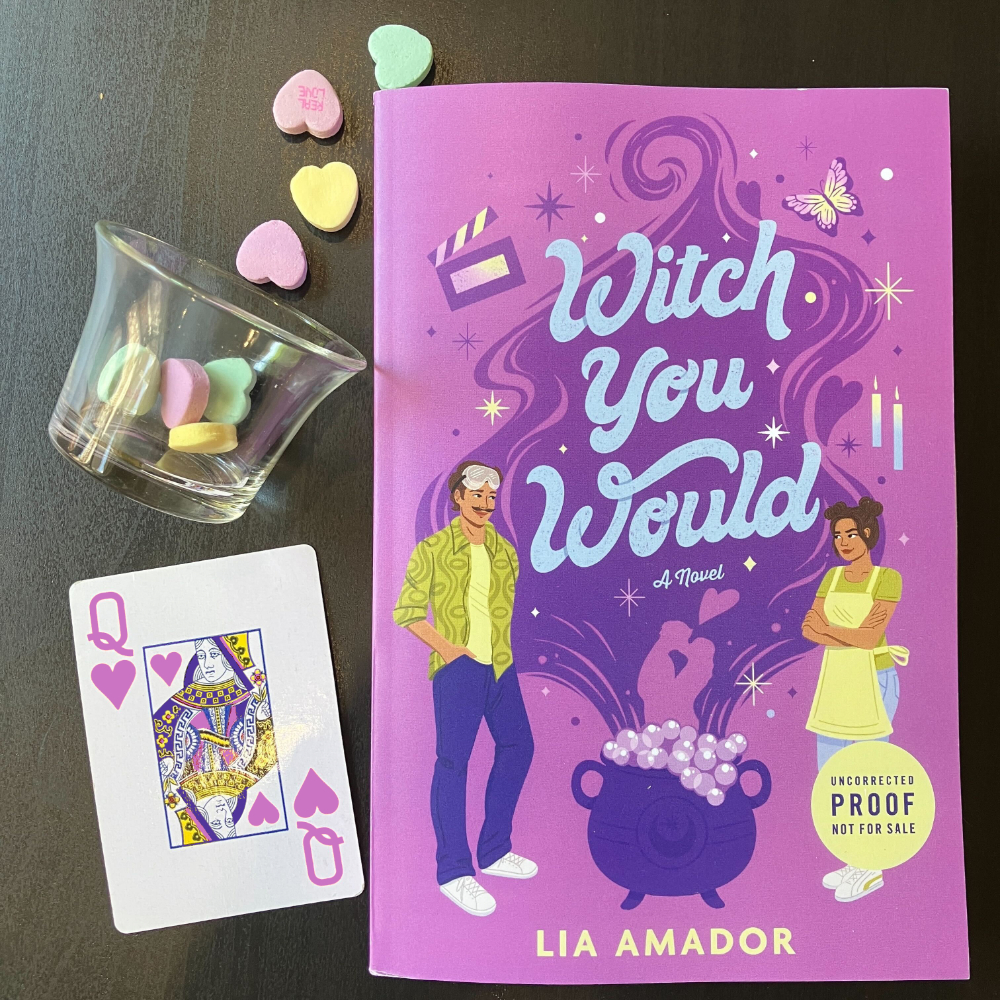
Witch You Would advance copy on top of a dark wooden table, with a spilled glass of candy hearts next to it, and a queen of hearts card below that

Witch You Would has been available on NetGalley and Edelweiss for a while, but last week I got an exciting package in the mail: galley copies, aka advance reader copies!

This is my fifth book, but it’s my first one writing as Lia Amador, and my first romance novel, which means I’m debuting all over again. That makes these galleys even more special to me, because they’re a tangible symbol of this new start.

The last time I got physical advance copies of a book of mine was for Chilling Effect in 2019. Then the pandemic started, everything went down the proverbial toilet along with hoarded toilet paper, and none of my other books ended up having ARCs.

I wasn’t sure whether I’d get any for this book, either. Without delving too deeply into politics, which are deeply exhausting at the best of times, many companies in different industries are dealing with import issues. Publishing seems okay for now, but who knows where we’ll be tomorrow, or next week, or next month.

But! I’m celebrating this win, because I try to celebrate all of them. I got a Costco membership and treated myself to a bottle of margarita wine cooler, then baked some vegan maple oatmeal muffins. It’s the little things.

If you want to win your very own advance print copy of Witch You Would, there’s a Goodreads giveaway happening until May 5th! Avon is giving away 100 copies, so your odds are pretty good. It’s US only, alas, sorry international folks.

If you’re a book blogger who wants a copy, or you want to interview me about this book (or any of my others), feel free to reach out!

Witch You Would is on NetGalley

A fanned out spread of ace cards on fire hovering over an upturned hand
Image by Juluis Drost

If you’re a reviewer, you can now request Witch You Would on NetGalley! Go forth and obtain a copy, and may the odds be ever in your favor. I do not have any power over who gets approved or denied, but if you have trouble, maybe I can put in a good word for you? Let me know!

I find it adorable that there’s a trope list included on the page. My book tropes are:

  • fake dating
  • secret admirers
  • enemies to lovers
  • mistaken identity
  • grumpy sunshine

It’s funny because I wouldn’t have thought “enemies to lovers” and “grumpy sunshine” applied… I feel like it’s more “reluctant allies to lovers” or at least one-sided enemies? But I can see it. The grumpy sunshine totally works, though. I can’t think of many examples where the woman is the grumpy one in the pair, and I think that unconscious bias kept me from noticing what was obvious to my editor. Hopefully folks who love these tropes will enjoy how they’ve manifested here.

I have no idea when reviews are going to start happening, but since we still have a bit over eight months before the book appears on store shelves, I imagine we’re in for a long wait. Stuff that’s coming out sooner takes priority, and for good reason.

And speaking of waiting, I keep waiting for the point in my career at which the idea of people reading my book won’t hammer on my nerves like a button masher playing Street Fighter. That point has not yet arrived, and I suspect it never will. As the wise ones say, your problems don’t go away as you level up, they level up with you.

Stay tuned for more updates as they become available!

Witch You Would cover!

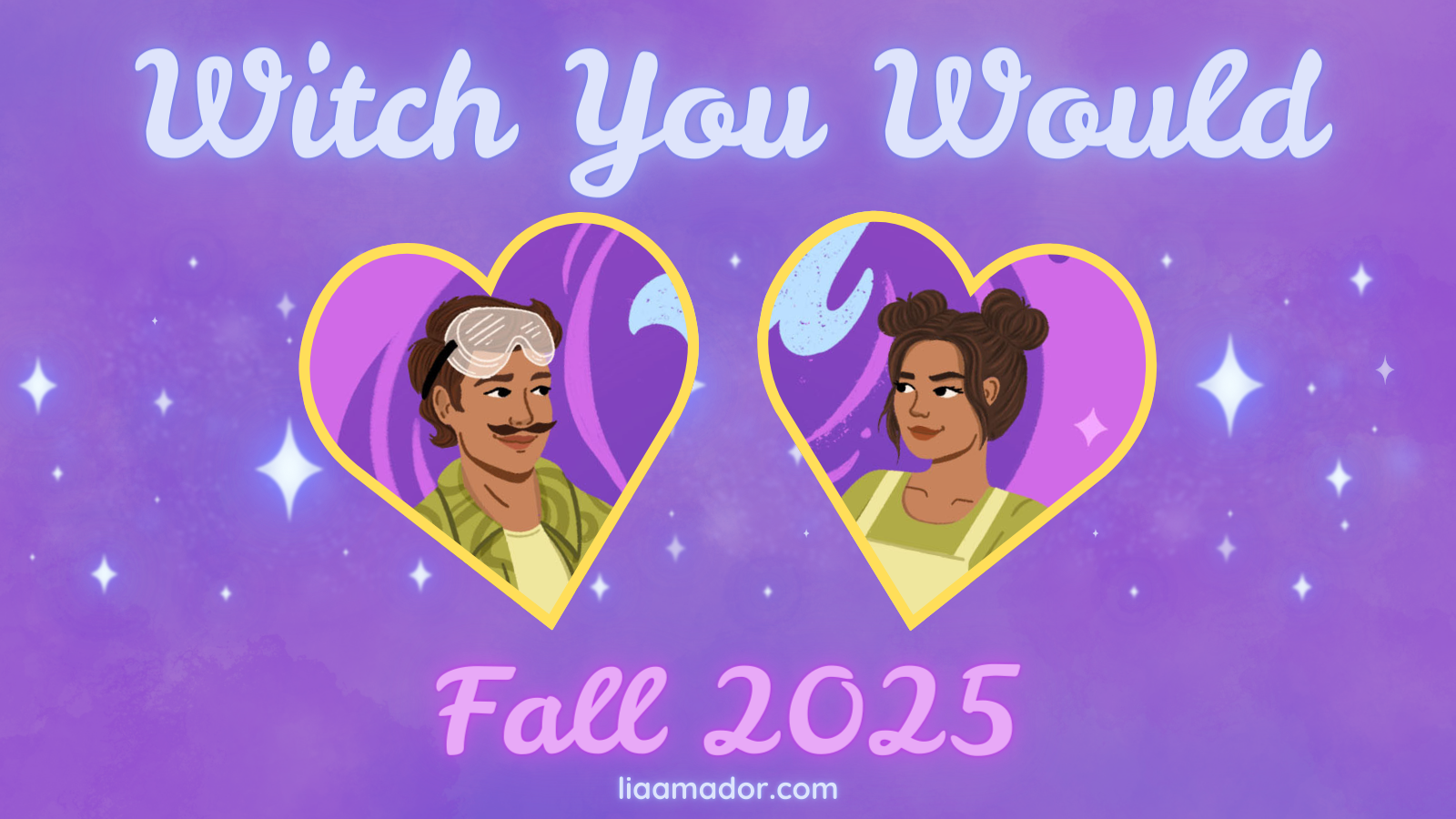
Close ups of Gil and Penelope inside heart-shaped containers on a purple background with blue stars, text: Witch You Would, Fall 2025, liaamador.com

One of the challenges of being a traditionally published author is that sometimes you have to sit on things for a while and wait until you can share them. The cover for Witch You Would is one of those things.

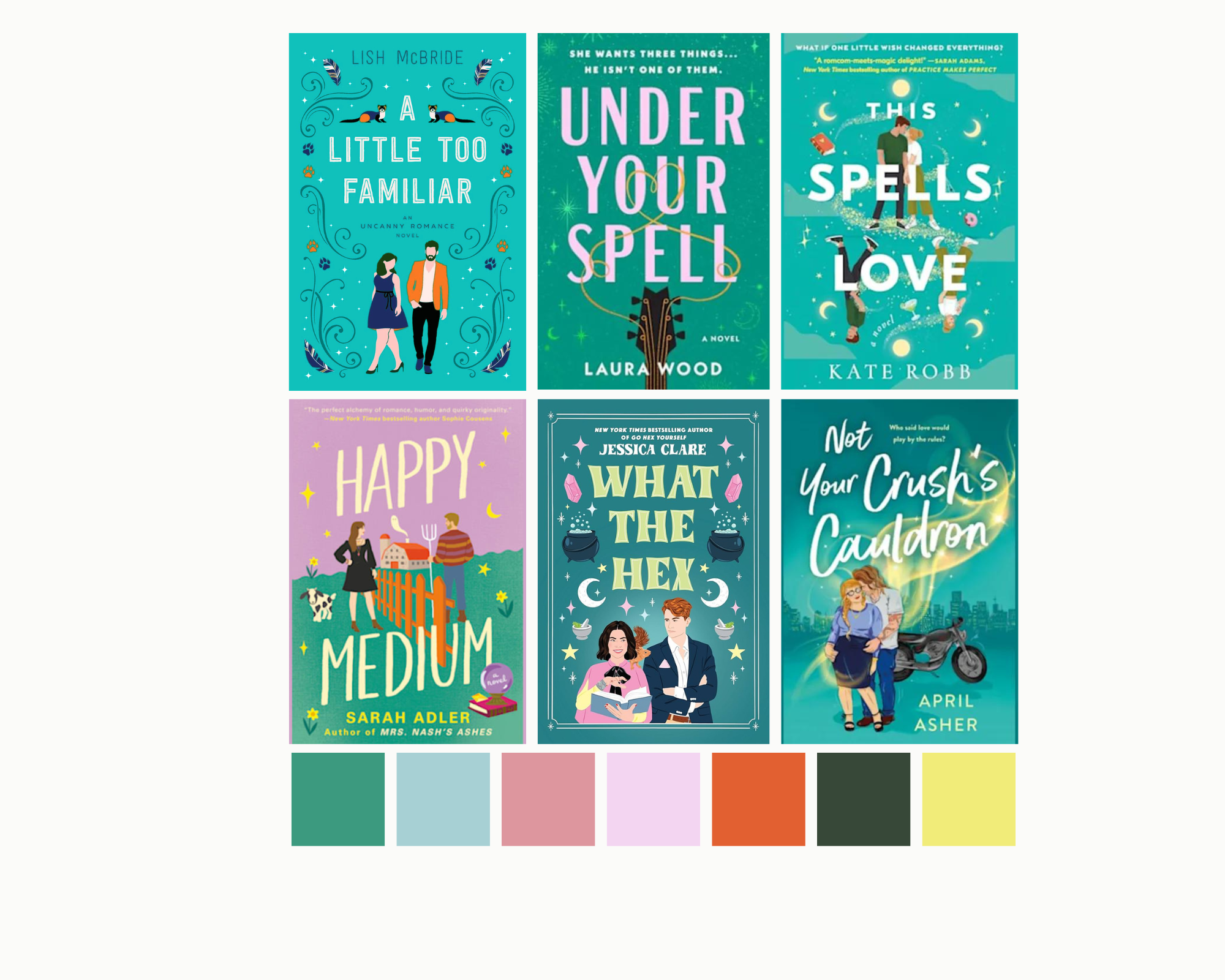
When cover talks started with my editor, I did SO much research. My friends (and maybe some of my enemies) can tell you I had color-coded collections of other contemporary fantasy romance books to use as visual aids. No, seriously, behold:

The covers of six romance novels with similar teal, pink and yellow color schemes

This is just one example. I had… several.

The more art you see, the more you notice the clear trends. I offered my editor a few different ideas for potential cover designs based on all this research, and the artist, Jess Miller, totally delivered with an extremely cute initial sketch.

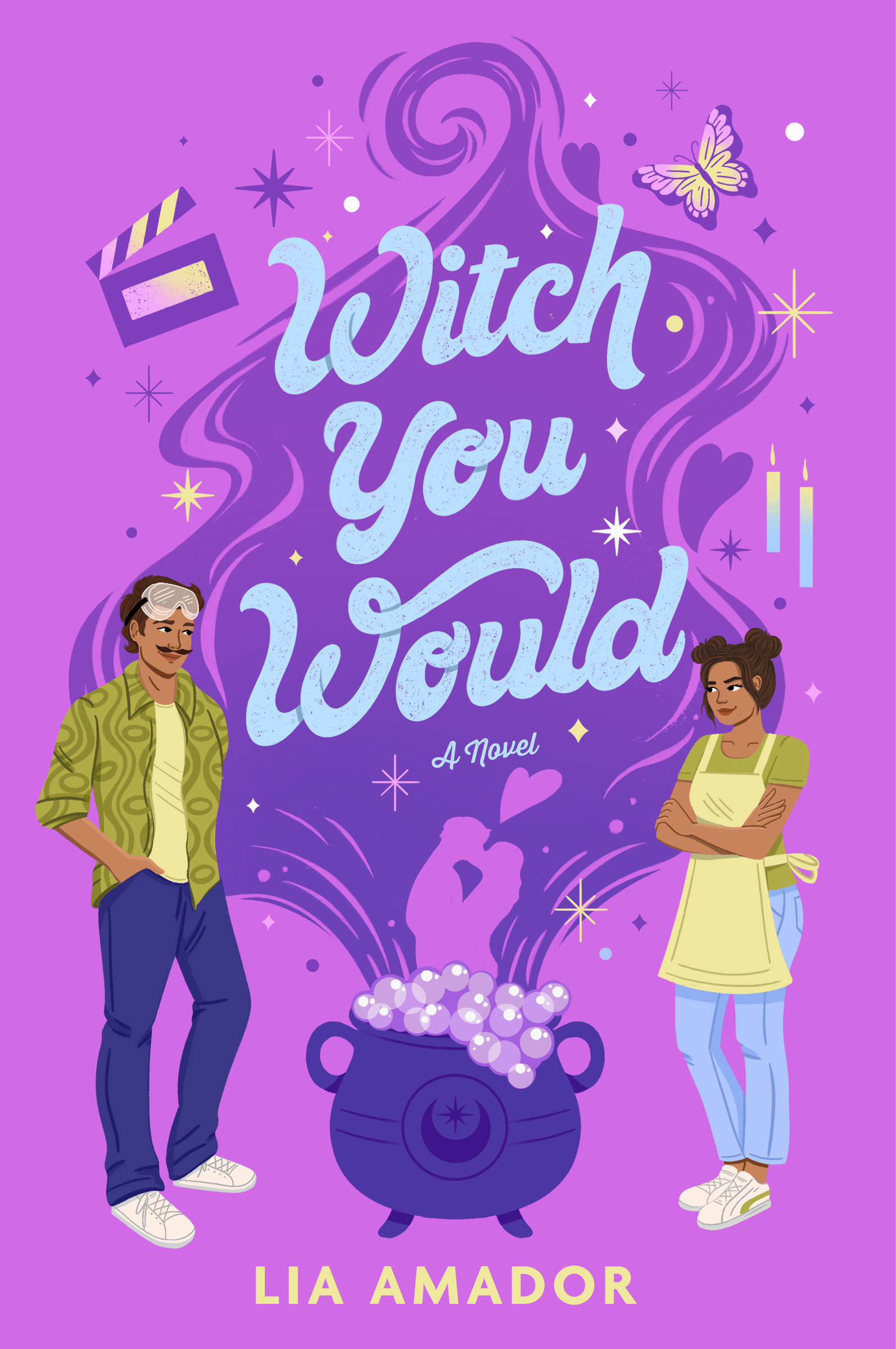
I requested some tweaks, which is not always a thing authors can do—and if they do, it may not actually happen. In this case, Gil didn’t have his signature fake mustache, and Penelope was missing her also-signature space buns, so I asked to pretty please have those included if possible. It also didn’t feel like the reality TV show elements were strong enough, so I asked for a slate to be included to get more of that vibe up front. Finally, I asked if their clothes could match, because that’s a thing that keeps happening to the characters throughout the book, so it would be nice to also have on the art.

Would the cover have been bad or wrong without these changes? Nope! It still rocked. But having them integrated really made this feel like the cover for THIS book, if that makes sense. Sometimes it’s those little details that tie the room together.

And then, the title got changed. Ack! So the art had to be updated yet again. Artists: they get the job done. Pay them. It’s worth it.

But now, at long last, everything is finished and ready and I can finally, FINALLY share the cover! Without further ado, here it is!

Cover for Witch You Would, Gil and Penelope stand on opposite sides of a bubbling cauldron billowing smoke with the outline of a heart-shaped couple smooching inside, floating around it are a film slate and butterfly and a pair of candles

I keep looking at this and smiling! It’s such a delight. Gil’s awful shirt and safety goggles, Penelope’s apron and confrontational crossed arms, the smooching outline in the cauldron smoke… The vibes, they are immaculate.

You can preorder the book now at the store of your choosing, and have a happy surprise waiting for you when it comes out on September 2nd. If you’re a reviewer, stay tuned for ARC information as it becomes available.

Writer lies and cloudy skies

Like a lot of writers and other artists, I deal with imposter syndrome, and not the kind where I toss little colorful astronauts out of airlocks. I have this spark of hope that maybe, actually, I’m not bad at creating stuff, but I also have a black hole of dread and shame and fear of rejection that swallows the spark faster than a puppy snarfing up food dropped on the floor. Every success is a fluke, every compliment is a lie, and anyone who is fooled into thinking anything positive about me or my work will soon realize they’ve been duped*.

One of the techniques used in The Artist’s Way to help people deal with these, to use an extremely scientific term, “badfeels,” is creative affirmations. The actual list in the book is strongly spiritual—”I am a channel for God’s creativity,” “My dreams come from God,” and so on—but more generally the text explores the idea of replacing negative beliefs and self-talk with positive statements. These can be things like “I deserve love” or “I deserve fair pay” or “I deserve a rewarding creative life,” but they can also be compliments like “I am a brilliant and successful artist” or “I have rich creative talents.”

When our brains object to these statements, we’re supposed to write down those objections and try to figure out where they came from. Who hurt us? Who made us doubt ourselves? Who told us the mean things that we’re now repeating back to ourselves? That exploration is meant to be cleansing, an emotional enema that will then allow us to believe in the affirmations instead of rejecting them.

For some people, this absolutely works. I wish I was one of them.

For me, affirmations are lies I’m trying to tell myself. No amount of external assurance or internal arguing will get rid of this conviction. If you tied me to a chair and clamped my eyelids open and forced me to watch video after video brainwashing me into believing “I have rich creative talents,” I can assure you, my droogs, I would go full Clockwork Orange on myself within days.

It comes back to trust. I already struggle to trust myself, so telling me I have to convince myself of things I believe to be untrue simply reinforces that I am not to be trusted. It’s the emotional equivalent of pulling myself up by my bootstraps; it can’t be done, and it ends in frustration and pain.

It also becomes a vicious cycle. I try to tell myself a positive thing; I reject it as a lie that I’m just telling myself so I’ll feel better; I lose trust in myself because I know I’m lying to myself, making me a lying liar who lies; future attempts to tell myself positive things are rejected even harder. All I’m doing is eroding any trust in myself, and that erosion spreads from my creative endeavors to all aspects of my life and thoughts and feelings. If I’ll lie to myself about this, what else?

I don’t spend all my time wallowing in a pit of despair—not about this, anyway—so clearly I have developed coping strategies that allow me to get my work done. Maybe they’ll work for you, too.

The thing I do most frequently evolved from a technique I learned from a meditation app: noting. It goes like this: I have dark thoughts about myself, my writing, my career, whatever. I have to get stuff done in spite of the thoughts. I note that I’m having those thoughts, the same way I’d note the weather outside my house. “Look, it’s raining.” “Look, there are those ‘my writing sucks and I’ll never amount to anything’ thoughts again.”

I don’t force myself to ignore the thoughts, because that actually ends up paradoxically putting more focus on them and thus they stick around longer—it’s like yelling “I’m not looking at you!” at the rain, which, to do that, you’re kind of definitely looking at it, aren’t you? Or at least covering your eyes and thinking about how you’re not looking at it, no sir. And arguing with them? Same deal: then I’m having unpleasant conversations with the voices in my head, and I really would rather be writing, or cleaning my bathroom, or doing almost anything else that is either more productive or relaxing.

Instead, I try to shift my attention to the thing I’m supposed to be doing, even though those thoughts are still there, the same way I’d look away from the window as it’s raining outside. The rain hasn’t stopped, I’m not ignoring it per se, it’s just there but I’m not staring at it. I’m starting a sprint timer, possibly in a Discord with other people or while watching a Twitch stream, and I’m getting back to work.

You may have seen a comic at some point, of someone yelling “I don’t like thing” and then the clouds part and an angel descends from heaven and hands them a piece of paper, upon which is written, simply, “ok” in block print. Noting is basically me, the angel, handing my moody brain that piece of paper and then returning to heaven to get back to my angel duties. The yelling person isn’t gone, but I’m not standing there letting them continue to yell at me. I acknowledge them, and I move on.

It took a lot of practice to get this technique to work consistently, but it’s been way more successful for me than affirmations because I’m not actually telling myself anything. I’m not trying to force my thoughts to be positive, or convince myself that my badfeels are wrong. All I’m doing is… working anyway.

Is it spite? I don’t feel spiteful, but maybe it’s a little bit that. I think, weirdly, it’s more similar to defeatism, or perhaps acceptance. Maybe I can’t stop that mean little voice, but I can put my headphones on, crank up the lo-fi beats, and let it fade to background noise.

Sometimes, going back to The Artist’s Way methods, sharing the badfeels with friends can also help me move past them. I can say, “I’m feeling like crap today in this specific way, I know it will pass, but I had to get it out.” And they’ll remind me that, yes, it will pass, just like the weather does, eventually. And even if it doesn’t, I can grab an umbrella or a raincoat and go get the groceries anyway.

Okay, this analogy is getting away from me, but you see what I mean.

Can “writer lies” ever work? For some people, absolutely. And some ways of constructing them may succeed better than others.

A friend of mine (AJ Hackwith) coined that term, specifically, for the “lies” we tell ourselves to be able to get our writing done. They can be things like, “I’m going to pretend I’m writing a fanfic of my own story,” or “I’m only going to write two sentences and then stop.” These may not even be lies, technically speaking; maybe you ARE going to treat your story like it’s a fanfic, or you’ll stop after two sentences instead of getting hyped enough to continue. Part of what makes the assertions work is that seed of truth or possibility.

Which leads to the next note, which I got from someone (Susan Alia) on Bluesky: sometimes an affirmation can work if it’s built on something you know to be true. One example that I’ve deployed, to mixed success—because, again, affirmations are not For Me as a rule—is, “You’ve done this before and you can do it again.” I tend to use it when I’m having, perhaps not writer’s block exactly, but writer’s inertia, where I can’t make myself start working out of fear that the writing will be bad.

The first half of that affirmation is demonstrably true; I have written many things! There’s a whole page on my website dedicated to the ones that have been published. It then stands to reason, even if it’s not certain, that the second half of the affirmation COULD be true, that the odds of it being true are good enough that if I get back to work, maybe I can MAKE it be true.

Ultimately, that’s what this all comes down to: building our truths, and weathering our storms. You may not be able to shut down intrusive thoughts, but you also don’t have to stop what you’re doing and give them your attention. You may not be able to chant the rain away, but you can close the curtains, make some tea, take your meds, and let the clouds do their thing while you do yours**.

*As a side note, a thing one of my therapists mentioned regarding compliments: if I reject a compliment that someone gives me, I am effectively calling that person a liar. Am I actually going to sit here and consider all my friends and all the fans of my work to be liars? Or fools that I’ve somehow tricked into liking me or my art? Of course not! That’s really messed up! Thinking about my imposter syndrome this way helps me get past it when it flares up, because I am highly susceptible to guilt even if logic doesn’t always work.

**People who are in a crisis situation should not be reading this and going, “But I am stuck outside in the rain and I have no way to get dry, so this makes no sense!” Or rather, yes, that’s the natural response, because if you’re in a crisis situation then the first thing you need to worry about is finding a way to get out of the crisis. This is not an essay for people who need solutions to extremely serious life problems; this is not a “this, too, shall pass” or “just keep swimming” or “stay positive” kind of reply to hardship. You can’t bootstrap your way out of poverty or war or political turmoil or illness. Anyone who pretends there are easy solutions to complex problems is probably trying to sell you something.