I posted this writing rant about twists and dramatic irony on Bluesky a few days ago, but it seemed useful to drop it on my blog as well, for posterity if nothing else! With some editing and expansion, of course.
I was inspired by Gwenda Bond sharing this piece about single vs dual POV in romance novels. Beyond the useful thoughts about what each approach accomplishes, it touches on the concept of dramatic irony, one of my favorite literary techniques.
If you know me or have met me, you’ve probably heard me repeat a lecture on twists my TV writing teacher gave my class over twenty years ago. It was delivered at the height of the Shyamalan twist, which many college students in the film program attempted to replicate, with mixed results.
M. Night Shyamalan didn’t invent the twist; at a minimum, we’ve got plenty of Twilight Zone episodes predating his work. I think, though, that when someone successfully executes a specific technique, there’s this ripple effect, a broad urge to try it as well. We’ve seen it with mystery/puzzle box shows, as another example, which is a whole other lecture I’m sure the same professor delivered later, when those got huge.
Anyway.
Twists became the lynchpin holding a lot of student scripts together. Instead of artful suspense and tension, many stories were basically:
1) Setup
2) Action
3) Twist
4) Please clap
The ubiquity of twists primed us to expect them, which in turn made us apply our story brains to guessing them in advance. We were students! It was our job to dissect stuff and figure out how it worked. Sometimes this ruined our ability to simply enjoy stuff; sometimes it made us better able to appreciate good craft.
If twists hadn’t been so common, maybe it would have been fine. Maybe our professor wouldn’t have felt compelled to intervene. But he did, and here’s what he said.
Twists are extremely difficult to execute well. If they’re too obvious, the audience can see them coming from a mile away. We feel bored, or insulted that you thought we’d fall for it. If they’re too out of nowhere, the audience feels dissatisfied because you basically tricked us, and not in a fun way. You pulled the rug out from under us; you painted a fake tunnel on a rock wall and chuckled cruelly when we ran into it.
In either case, audience expectations haven’t been met. You promised us a king cake, and instead we got a cake wreck, or a pile of rocks. The path between these two outcomes is a tightrope stretched across a ravine.
Surprise is good and desirable, but it’s not as useful as tension. Suspense. The anxious mixture of feelings you experience as you wait to see what happens to characters or a world you’re invested in. The cathartic release when the arrow that was loosed from the bow finally hits something.
Waiting for a twist to be revealed is a form of suspense, but as noted, the failure modes are not cathartic. They’re frustrating, annoying, unsatisfying. If you spend the whole time waiting for everything you know to be reversed or undermined, your attachment to the subject is diminished. Your enjoyment, instead of being ongoing throughout the story, becomes contingent on the final form of the twist and whether you like it.
Dramatic irony is the solution to this problem—or a potential one, at least. You give the audience information the characters don’t have, which creates natural tension as we watch actions being taken and choices being made without essential knowledge. The suspense is in waiting for the fictional people to catch up, or not, as the case may be. What will they do differently when they’re finally enlightened? Will it change anything? Will it be too late? What happens if they never learn?
If the audience is in on the trick from the beginning, we’re not being insulted by a bad twist the writer thinks we’re too obtuse to expect. We’re not being subjected to a random outcome we never could have predicted. We know, more or less, where the track leads, and we’re along for the ride, to see how exactly it crashes or how someone manages to save the day. We can still be surprised by what happens along the way, the nuances of character interactions, the specific details of the consequences and setbacks and so on.
Romances with dual POVs are one easy example of how dramatic irony can be effective. As the linked article above notes, we lose the single-POV sense of uncertainty experienced by the main character, who can only speculate about the unrevealed thoughts and feelings of the love interest. However, we gain interiority that allows us access to the logic driving the various decisions and misunderstandings typical of the genre. There’s a frisson of delighted frustration in watching two people fail and flounder and ultimately figure it all out.
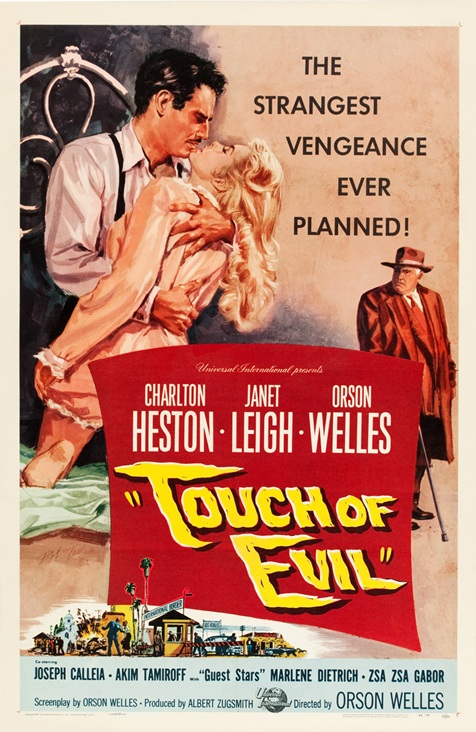
There’s also the kind of edge-of-your-seat suspense you can derive from a well-placed imminent explosion, literally or figuratively. Touch of Evil by Orson Welles begins with someone putting a time bomb in the trunk of a car; this is followed by a single long take of just watching that car drive, waiting for the bomb to go off. We don’t know where the car is going, or why the bomb is there. We don’t know what will happen in the aftermath. Those are some of the most tense few minutes of cinema ever made, even though virtually nothing happens, because of the dramatic irony created by the setup.
This is not to say that twists are never allowed, or that no one is dissatisfied by dramatic irony. Failure modes can be things like individual scenes or the whole situation becoming painfully cringe-inducing, such that you don’t want to watch anymore. It can also become unreasonably farcical, breaking suspension of disbelief—say, because the characters remain ignorant even though it would be incredibly sensible for them to figure stuff out at various points.
For a class full of budding filmmakers, though, this was a lesson we really needed. It freed us to think in different forms and structures, to use the right tool for a given task instead of trying to apply the same hammer to everything. And clearly, I’ve never forgotten this! Hope it can help you, too.